



Excise taxation of products harmful to health in the context of the implementation of the national development goals of the Russian Federation
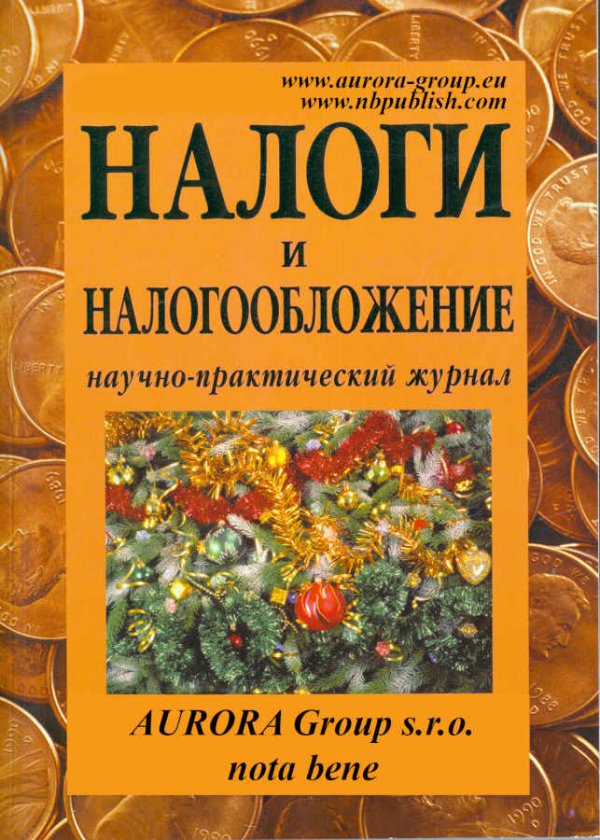
- Autores: Musaeva K.M.1
-
Afiliações:
- Edição: Nº 3 (2023)
- Páginas: 21-40
- Seção: Articles
- URL: https://bakhtiniada.ru/2454-065X/article/view/360721
- EDN: https://elibrary.ru/DVWXWA
- ID: 360721
Citar
Texto integral

Resumo
The subject of this study is the mechanism of excise taxation and its regulatory potential in the context of curbing the consumption of harmful products. The research focuses on excise taxation of products harmful to health, identification of ways to balance rates on alcohol-containing and alcoholic products, as well as assessment of the feasibility of taxation of soft drinks with excessive sugar content (innovations in the field of Russian taxation). The relevance of the research topic is determined by the need to identify ways to fully realize the regulatory potential of excise taxation in the direction of reducing the consumption of products harmful to health. The purpose of the work is to substantiate recommendations aimed at revealing the regulatory potential of excise taxes in terms of curbing the use of harmful beverages in the context of the implementation of the national development goals of the Russian Federation. The paper identifies the prerequisites for improving excise rates, argues for the inadmissibility of increasing the availability of strong alcoholic beverages as a result of an unbalanced pricing policy. Based on the analysis of scientific works of foreign and Russian authors, a study was conducted on the impact of excise taxation of beverages with excessive sugar content on the strengthening of socio-economic inequality of persons with different income levels, changes in their behavior, in terms of the use of harmful beverages. The expediency of constant monitoring of excise taxation of beverages with excessive sugar content is shown, the conclusion is argued that the main purpose of this taxation should not be to increase budget revenues, but the formation of correct eating habits. Recommendations of a regulatory, legislative and organizational nature are proposed, aimed at the fullest realization of the potential of excise taxation, in terms of curbing the use of harmful beverages. The necessity of developing software solutions integrating the mechanisms of implementing a set of measures to reduce the morbidity of the population, the formation of proper eating habits, including through the improvement of excise taxation in modern conditions of the Russian Federation, is substantiated.
Bibliografia
Вишневский В.П., Никулкина И.В., Гончаренко Л.И., Гурнак А.В. Налоги и технологии: прошлое, настоящее и будущее налоговой системы России//Terra Economicus.2020.№18(4).С.6–31. Вишневский В.П.,Гончаренко Л.И., Дементьев В.В., Гурнак А.В. Принципы налогообложения для цифровой экономики//Terra Economicus. 2022. №20(2). С. 59–71.https://doi org: 10.18522/2073-6606-2022-20-2-59-71. Зверева Т.В. Перспективы применения акциза на сладкие газированные напитки в России//Инновационное развитие экономики.2020.№4-5(58-59).С.143-151. Колосницына М.Г., Дубынина А.И. Антиалкогольная политика в современной России: направления развития и поддержка населения. Журнал новой экономической асссоциации. 2019. №2(42). С.94–120.https://doi org: 10.31737/2221-2264-2019-42-2-5. Львова Мс.В., Зотиков Н.З., Арланова О.И. Акцизы, их роль в доходах бюджетов //Вестник Евразийской науки. 2019. №2.С.3.-9. Малис Н.И. Вводить ли в налоговую систему РФ налоги на «вредную еду»?//Налоги и финансы. 2016.№3. С.38-43. Мусаева Х.М., Керимова З.А. Регулирующий потенциал акцизного налогообложения: опыт зарубежных стран и возможности его использования в условиях Российской Федерации //Региональные проблемы преобразования экономики. 2019. №12(110). С.343-350. Ряховский Д.И., Балакин М.С. Анализ влияния уровня налоговой нагрузки на экономический рост: теоретический и эмпирический аспекты//Экономика устойчивого развития. 2022. № 3(51). С.119-122. Пинская М.Р., Шаталов С.Д., Пономарева К.А. Лучшие практики сокращения неформального сектора экономики налоговыми мерами// Известия Байкальского государственного университета. 2022. №3. С.447–458. https://doi org:10.17150/2500-2759.2022.32(3).447-458. Chatelan A., Rouche M., Kelly C., Fismen A., Pedroni C., Desbouys L., Castetbon K. Tax on sugary drinks and trends in daily soda consumption by family affluence: an international repeated cross-sectional survey among European adolescents //American Journal of Clinical Nutrition. 2023. Vol.117. Iss.3. P.576-585. https://doi.org/10.1016/j.ajcnut.2023.01.011. Fletcher J., Frisvold D., Tefft N. The effects of soft drink taxes on child and adolescent consumption and weight outcomes//Journal of Public Economics. 2010.Vol.94. Iss.11-12. P.967-974. https://doi.org/10.1016/j.jpubeco.2010.09.005. Johnson R., Appel L., Brands M., Howard B., Lefevre M., Lustig R., Sacks F., Steffen L., Wylie-Rosett J. Dietary sugars intake and cardiovascular health: A scientific statement from the American Heart Association //Circulation. 2009. Vol.120. Iss.11. https://doi.org/10.1161/Circulationaha.109.192627. Marinello S., Pipito A., Leider J. , Pugach O., Powell L.. The impact of the Oakland sugar-sweetened beverage tax on bottled soda and fountain drink prices in fast-food restaurants//Preventive Medicine Reports. 2020. Vol.17. 101034 https://doi.org/10.1016/j.pmedr.2019.101034. Musaeva K.M, Aliev B.K., Magomedova R.M. More efficient taxation in the Russian federation nowadays// Fundam. Appl. Sci. 2017. № 9(2S). P.1468-1483 Ngo A., Wang X., Slater S., Chriqui J., Chaloupka F., Yang L., Smith L., Li Q., Shang C. Alcohol excise taxes as a percentage of retail alcohol prices in 26 OECD countries//Drug and Alcohol Dependence. 2021. Vol. 219. https://doi.org/10.1016/j.drugalcdep.2020.108415. Neufeld M., Rovira P., Ferreira-Borges C., Kilian C., Sassi F., Veryga A., Rehm J. Impact of introducing a minimum alcohol tax share in retail prices on alcohol-attributable mortality in the WHO European Region: A modelling studies//The Lancet Regional Health-Europe. 2022. Vol.15. P.1.-12. https://doi.org/10.1016/j.lanepe.2022.100325. Wall M., Casswell S., Callinan S., Chaiyasong S., Alcohol taxes’ contribution to prices in high and middle-income countries: data from the International Alcohol Control Study//Drug Alcohol Rev. 2018. №37(Suppl 2). P.27–35. https://doi.org/10.1111/dar.12638. Alcohol taxes’contribution to prices in high and middle-income countries: Data from the International Alcohol Control Stud Alcohol taxes’contribution to prices in high and middle-income countries: Data from the International Alcohol Control Stud Alcohol taxes’contribution to prices in high and middle-income countries: Data from the International Alcohol Control Stud World Health Organization. Fiscal Policies for Diet and Prevention of Noncommunicable Diseases//Technical Meeting Report. 2015. №5–6.URL:https://www.who.int/docs/default-source/obesity/fiscal-policies-for-diet-and-the-prevention-of-noncommunicable-diseases-0.pdf?sfvrsn=84ee20c2. Zhang Q., McCluskey J., Gallardo K., Brady M. Avoidance behaviors circumventing the sugar-sweetened beverages tax//Food Policy.2021 Vol.105. P. 10216. https://doi.org/10.1016/j.foodpol.2021.102166. "em"
Arquivos suplementares
